

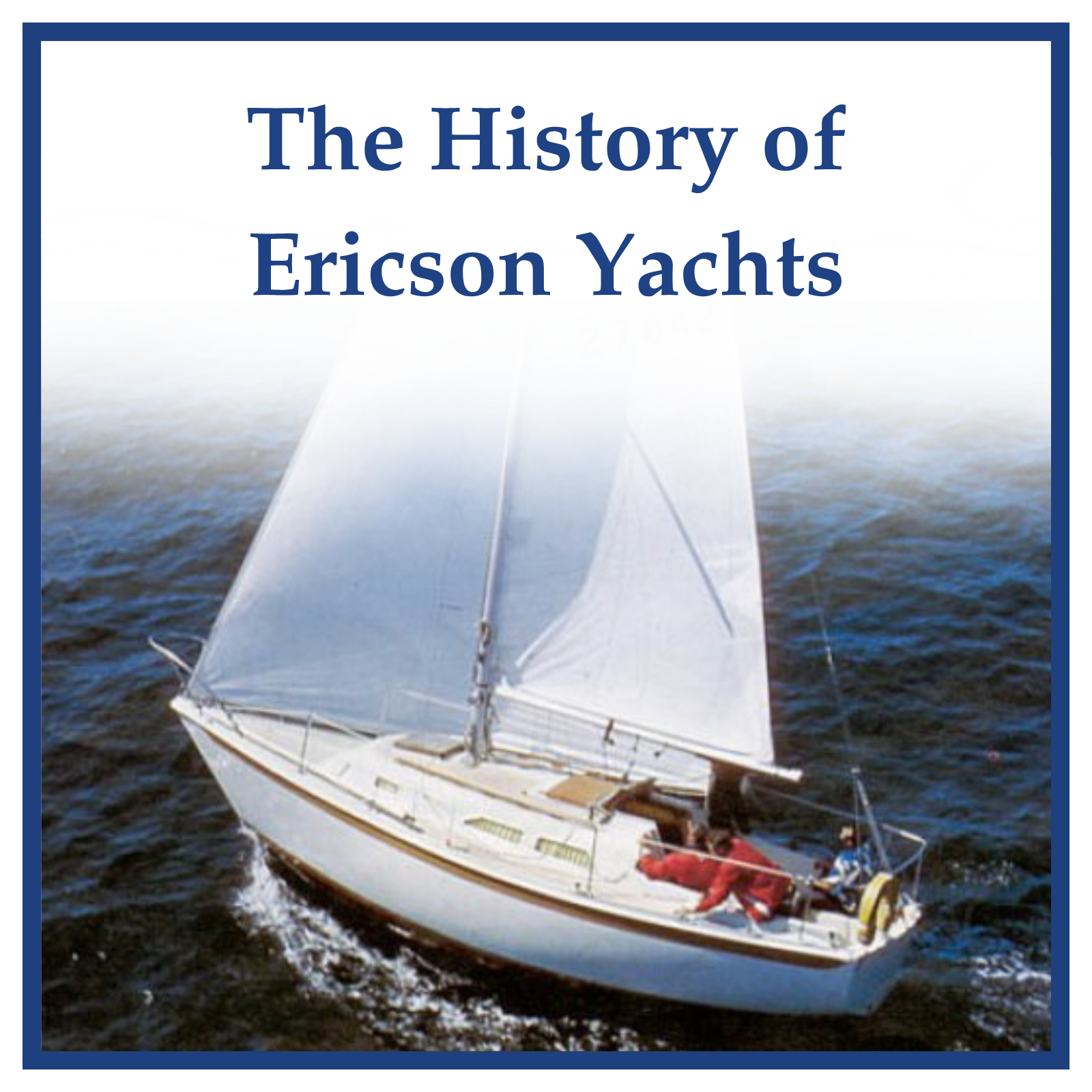
Founded in Southern California during the fiberglass boatbuilding boom of the 1960s, Ericson Yachts established itself as a premier American builder of fast, elegant, and structurally robust performance cruisers.
Origins & Golden Era
Ericson Yachts was established in 1964 in Costa Mesa, California—the epicenter of mid-century American fiberglass boat manufacturing. The yard quickly distinguished itself by balancing competitive speed under IRC/IOR rules with comfortable, mahogany-finished accommodations for coastal cruising. In 1971, the company was acquired by CML Group, providing the capital necessary to scale production rapidly while maintaining high construction standards
Design Philosophy & The Bruce King Era
The hallmark of Ericson’s success was its long-standing partnership with renowned naval architect Bruce King. King designed nearly the entire core product line, giving Ericson yachts their signature silhouette: graceful sheer lines, low-profile cabin trunks, fine entry bows, and tumblehome sterns.

Technical Milestone
A major technical milestone was Ericson’s introduction of the Tri-Axial Grid System in the late 1970s and 1980s. This heavy fiberglass floor frame was molded into the hull to distribute chainplate, keel, and engine loads evenly across the structure. This innovation eliminated hull flexing and created an exceptionally stiff, durable vessel suitable for offshore passages.
Key Ericson Models
| Model | Production Era | Key Specs & Reputation |
| Ericson 27 | 1971–1979 | The brand’s biggest commercial success with over 1,200 built; famed for its remarkable head room and interior volume in a sub-30-foot hull. |
| Ericson 29 | 1970–1978 | A versatile pocket cruiser with a high-aspect rig, excellent balance on the helm, and a strong user community. |
| Ericson 32 (Mk I, II, III) | 1969–1990 | Evolved across three generations. The Mk III featured the Tri-Axial grid, a wider beam, and an integrated swim platform/transom. |
| Ericson 35 (Mk II, III) | 1969–1990 | A classic offshore cruiser-racer; the Mk III is widely regarded as one of the best mid-sized bluewater boats built in North America. |
| Ericson 38 / 380 | 1980–1990+ | The flagship performance cruiser of the lineup, offering outstanding speed, tracking, and liveaboard comfort for ocean passages. |
| Ericson 39 & 41 | 1970s | Flush-deck IOR racers that proved Ericson’s engineering capabilities in serious offshore ocean racing. |
Ericson 38 / 381 / 38-200 / 380
The Ericson 38 and the Ericson 380 are part of a continuous lineage of flagship performance cruisers designed by Bruce King, but they represent different eras of manufacturing and ownership.
Production Timeline
- Ericson 38 (1980–1990): Manufactured by Ericson Yachts Inc. in Irvine, California. This era included specific model evolutions such as the original Ericson 38 (1980–1982), the Ericson 381 (1983–1985), and the Ericson 38-200 (1986–1990). The primary difference between the Ericson 38 and the Ericson 381 lies in their production timeline and the refinement of their interior layouts. While “Ericson 38” is often used as an umbrella term for the entire model line, they are distinct production generations.
- Ericson 38 (1980–1982): This was the original model featuring a “classic” layout. Key features included a V-berth forward, an enclosed head to port (with a hanging locker opposite), an L-shaped settee to port and a straight settee to starboard in the salon, an aft-facing nav station, and a double quarter berth aft to port.
- Ericson 381 (1983–1985): This model followed the original 38 as a refinement. The primary goal of the 381 was to streamline the interior geometry, specifically focusing on optimizing the main salon seating and storage capabilities.
- The 381 serves as the direct evolutionary successor to the initial 38, introducing improvements to the living space before the subsequent introduction of the 38-200 (1986–1990) and the later Pacific Seacraft-built 380 (1991–1998).
- Ericson 380 (1991–1998): Following the closure of the Ericson facility in 1990, Pacific Seacraft acquired the tooling and rights to the models. They produced the refined Ericson 380 variant throughout the 1990s.
Key DifferencesThe primary differences between the models are found in their interior layouts, structural refinement, and build quality associated with the manufacturing transition.
| Feature | Ericson 38 (1980–1990) | Ericson 380 (1991–1998) |
|---|---|---|
| Manufacturer | Ericson Yachts Inc. | Pacific Seacraft |
| Interior Layout | Evolved from classic layouts (V-berth forward, quarter berth aft) to the redesigned 38-200 layout (aft head, private aft stateroom). | Based on the refined 38-200 geometry, featuring updated joinery (solid cherry/teak), improved headliners, and enhanced bulkheads. |
| Displacement | 14,000–15,500 lbs (depending on sub-variant). | 16,000 lbs (typically heavier/more robust). |
| Build Quality | Features the “Tri-Axial Grid System” for structural rigidity. | Utilized the acquired Ericson tooling, generally known for high-end Pacific Seacraft fit and finish. |
Both models share the same Bruce King design DNA, including the signature hull shape, and are widely regarded for their speed, tracking, and suitability for offshore passages.
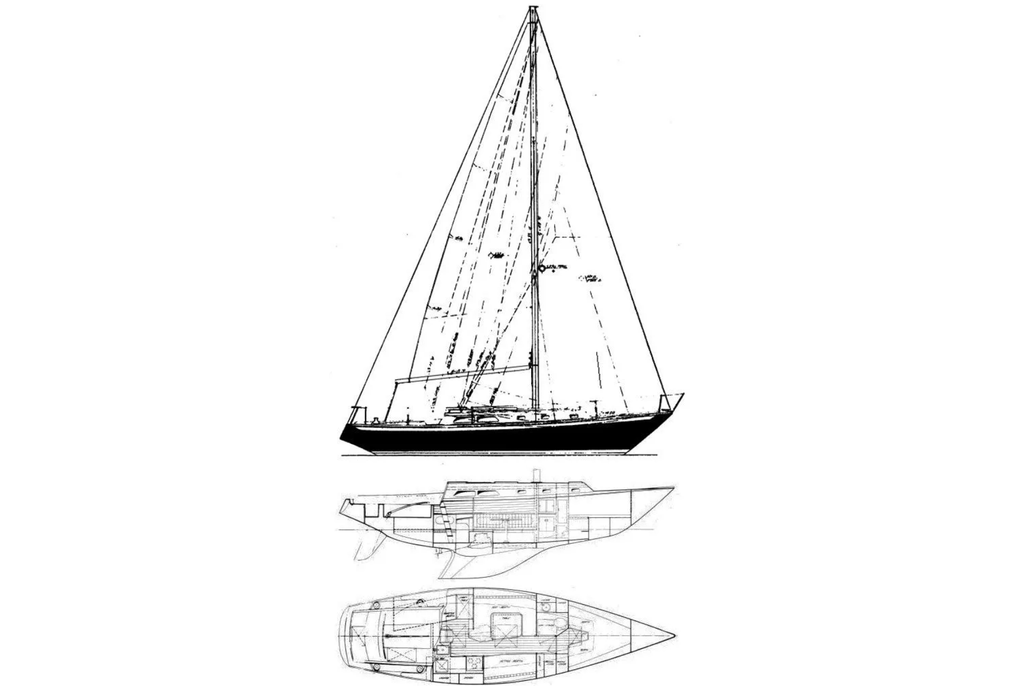
Photo above: Ericson 35
Acquisition & Modern Legacy
Following economic shifts in the marine industry, production ceased at the Santa Ana facility in 1990. Premium builder Pacific Seacraft acquired the Ericson tooling and rights, continuing to build select refined models—such as the Ericson 380—into the late 1990s.
Today, Ericson Yachts maintains a dedicated following across the United States. Supported by an active owners’ association (EricsonYachts.org), these vessels remain highly sought after on the brokerage market for buyers seeking classic lines, solid hand-laid fiberglass construction, and agile sailing performance.