

- Published by: Murray Yacht Sales Technical Division
- Expert Analysis: Engine & Generator Specialist
- Category: Marine Power Systems & Auxiliaries
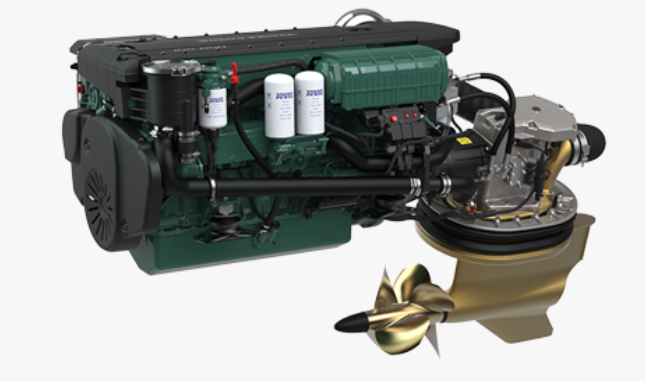
Since its revolutionary introduction, the Volvo Penta Inboard Performance System (IPS) has completely transformed modern motor yachting. Moving away from traditional shaft drives, IPS introduces steerable pod units with forward-facing, counter-rotating propellers that pull a boat through the water rather than pushing it.
For buyers browsing the brokerage market or owners looking to maximize their vessel’s lifespan, understanding the mechanics, model variants, and maintenance schedules of their IPS system is critical.
In this comprehensive guide, we break down how the system operates, decode the model nomenclature, outline vessel compatibility, and provide a handy cross-reference sheet for common maintenance parts.
System Description: The Power of Forward-Facing Pods
The genius of the Volvo Penta IPS system lies in its hydrodynamics. Traditional inboard shafts push water at an angle down and away from the hull. IPS pods, however, are mounted parallel to the hull bottom.
Key Characteristics of the IPS Architecture:
- Forward-Facing Props: The twin counter-rotating propellers face forward into “undisturbed” water. They operate in clean, turbulence-free water, which dramatically increases efficiency.
- Steerable Pods: Instead of relying on a traditional rudder to deflect water, the entire pod rotates to direct thrust. This provides unparalleled agility, especially when paired with Volvo Penta’s signature Joystick Docking system.
- Exhaust and Cavitation Management: Engine exhaust is directed through the pod and out into the propeller slipstream, drastically reducing noise, vibration, and cockpit fumes (often called the “station wagon effect”).
- Safety Shear Points: The pods are designed with a structural shear point. In the event of a severe underwater impact, the pod is engineered to break off cleanly below the hull line, keeping the hull intact and preventing the vessel from sinking.
The Specialist’s Take: Compared to traditional shaft installations, IPS delivers up to 30% reduced fuel consumption, a 15% faster acceleration rate, and a 20% increase in top-end speed for the same engine power output.
Decoding Volvo Penta IPS Model Numbers
One of the most common points of confusion for yacht buyers is the model numbering system. Unlike traditional engines, where the number reflects the engine’s actual horsepower (HP), Volvo Penta IPS models are named after their equivalent shaft-drive performance.
For example, an IPS600 does not possess a 600-horsepower engine. Instead, it means the system delivers the performance and speed of a traditional 600-HP shaft-drive installation, despite using a physical engine that generates significantly less power.
The Formula:
- IPS Model Number = Estimated Equivalent Shaft-Drive Horsepower
- Base Engine = The actual block size (D4, D6, D8, D11, D13) and its actual crank horsepower output.
System & Vessel Compatibility Chart
Volvo Penta IPS systems are optimized for planing and semi-displacement hull forms. Below is a breakdown of the IPS lineup, corresponding base engine blocks, and the types of vessels you will commonly find them on within the Murray Yacht Sales fleet.
| IPS Model | Base Engine Series | Actual Crank Horsepower | Pod Drive Unit | Typical Yacht Length / Style |
| IPS400 | D4 (3.7L Inline 4) | 300 HP | IPS10 | 30 – 38 ft / Express Cruisers, Sportfish |
| IPS500 | D6 (5.5L Inline 6) | 380 HP | IPS10 | 35 – 45 ft / Flybridge & Coupe Yachts |
| IPS600 | D6 (5.5L Inline 6) | 440 HP | IPS10 | 38 – 48 ft / Performance Cruisers, Trawlers |
| IPS650 | D6 (5.5L Inline 6) | 480 HP | IPS10 | 40 – 50 ft / Mid-sized Luxury Yachts |
| IPS700 | D8 (7.7L Inline 6) | 550 HP | IPS15 | 45 – 55 ft / Motor Yachts, Large Coupes |
| IPS800 | D8 (7.7L Inline 6) | 600 HP | IPS15 | 50 – 60 ft / Flybridge Cruisers |
| IPS950 | D11 (10.8L Inline 6) | 725 HP | IPS20 | 55 – 70 ft / Luxury Motor Yachts |
| IPS1200 | D13 (12.8L Inline 6) | 900 HP | IPS30 | 60 – 80 ft / Superyachts, Large Flybridges |
| IPS1350 | D13 (12.8L Inline 6) | 1000 HP | IPS30 | 70 – 100+ ft / Custom Motor Yachts |
Common Maintenance Parts & Cross-Reference Guide
Preventative maintenance is the absolute lifeblood of pod drive longevity. Because the pod drive combines transmission, exhaust, steering, and thrust in a submerged unit, keeping filters, impellers, and sacrificial anodes in good condition is paramount.
The following chart covers the most widely deployed tier—the D6-based IPS units (IPS500 / IPS600 / IPS650)—which represent the core of mid-sized express and flybridge yachts on the market today.
| Part Description | OEM Volvo Penta Part Number | Common High-Quality Cross-Reference | Recommended Service Interval |
| Primary Fuel / Water Separator | 22926758 | Racor 2010PM-OR (30 Micron) | Every 200 hours or annually |
| Secondary Fuel Filter (Engine) | 21718912 | Donaldson P550625 / Wix 33674 | Every 200 hours or annually |
| Engine Lube Oil Filter (Full Flow) | 22030848 | Baldwin B7299 / Wix 57204 | Every 200 hours or annually |
| Engine Lube Oil Filter (By-Pass) | 22030852 | Baldwin B7323 / Wix 57205 | Every 200 hours or annually |
| Engine Air Filter | 21379288 | K&N E-0664 (Verify dimensions) | Inspect seasonally, change as needed |
| Seawater Pump Impeller Kit | 22994993 | Sherwood 29000K / Jabsco 18958-0001 | Every 200 hours or annually |
| Pod Drive Transmission Oil Filter | 22492234 | Direct OEM Replacement Recommended | Every 200 hours or at haul-out |
| Pod Drive Lower Anode (Zinc) | 3889656 | Performance Metals Max-Zinc 3889656 | Every 6 months (dependent on water) |
| Pod Drive Transom Anode (Zinc) | 40005875 | Martyr CM40005875Z | Every 6 months (dependent on water) |
Note: For boats kept in brackish or fresh water, ensure you replace standard Zinc anodes with Aluminum or Magnesium alternatives, per Volvo Penta factory guidelines.
Thinking of Buying or Selling an IPS-Equipped Yacht?
Volvo Penta IPS has proven itself over decades of real-world use to be reliable, incredibly efficient, and a joy to operate around the docks. However, checking maintenance logs for timely pod oil changes and proper anode replacement is a critical step during any pre-purchase marine survey.
If you are looking to purchase an IPS-powered vessel or want to ensure your current boat is listed with specialists who understand the true value of this engineering marvel, connect with the team at Murray Yacht Sales. Our certified brokers are ready to guide you smoothly through your next acquisition or sale.