


By: Stanton Murray
Overview of J&J Design
Self-described Vision: “To Improve boating experience”
Founded in 1983 in Ljubljana, SR Slovenia (then Yugoslavia) by brothers Japec and Jernej Jakopin, J&J Design evolved into one of the world’s most influential pleasure-boat design studios. Over four decades, the studio has produced designs for more than 300 serial production models, resulting in more than 60,000 boats manufactured across 26 countries.
Origins & Breakthrough (1983–1987)
Before founding the studio, Japec Jakopin was a cardiologist and researcher at the University of Ljubljana who spent his weekends building DIY boats and managing a sailboat charter business. In 1983, after leaving academia, he partnered with his younger brother Jernej, an architect who had studied naval architecture at the Westlawn Institute of Marine Technology.
Their first client was Elan, the Slovenian sporting goods manufacturer. J&J Design created the Elan 31, followed by models like the Elan 33 and Elan 43. The line was an immediate commercial hit:
- Between 1983 and 1987, Elan sold nearly 1,000 units of the Elan 31 and 33.
- Elan’s marine division revenue expanded from DEM 2 million to DEM 32 million during that period.
- In 1985, an Elan 31R won the production boat class at the Three Quarter Ton World Championship.
Global Expansion & Major Shipyards (1987–2000s)
When Elan shifted its focus back to ski manufacturing in the late 1980s, J&J Design expanded into the international market. Japec served as sales and marketing director for French builder Jeanneau while J&J continued designing production hulls for them, including popular models in the Sun Odyssey and Sun Fast series.
Over the following decades, J&J collaborated with over 60 global shipyards, including Beneteau, Bavaria, Dufour, Grand Soleil, and Sunbeam. They specialized in optimizing production engineering, enabling shipyards to mass-produce reliable, high-performance cruising yachts efficiently.
Pod-Drive Optimized Planing Geometry
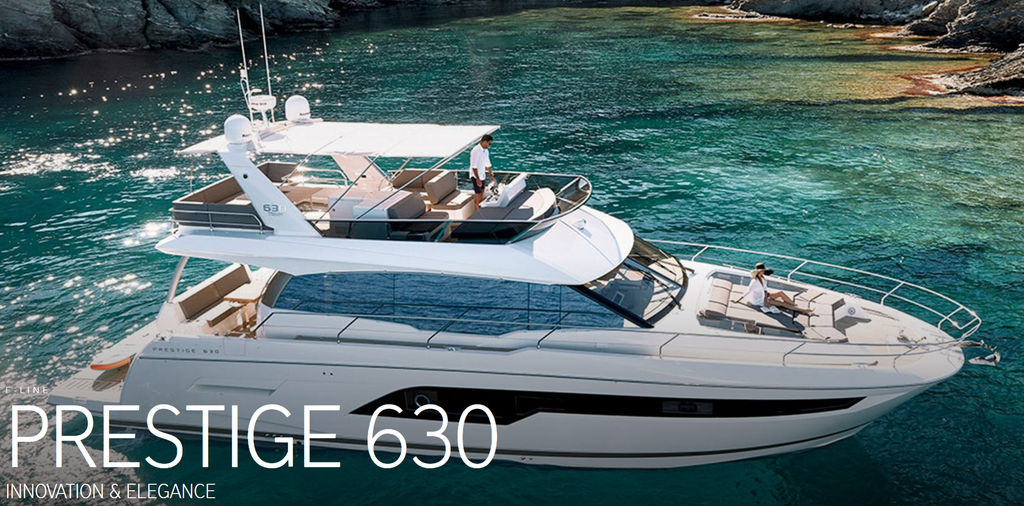
In the luxury motor yacht sector – Groupe Bénéteau (Prestige, Jeanneau, Beneteau), Bavaria, Greenline, Monte Carlo Yachts, and Sea Ray, and specifically for hulls like the Prestige 630—J&J Design’s engineering is recognized for several distinct hull characteristics.
J&J Design began working on motor yachts for the Prestige brand and engineering for Volvo Penta IPS pod propulsion in the mid-2000s, with development accelerating around 2008–2010.
Timeline & Key Milestones
- Volvo Penta IPS Release (2005)
- Volvo Penta officially launched its revolutionary forward-facing IPS (Inboard Performance System) pod drive at the London Boat Show in 2005. Pod drives required completely re-engineered hull dynamics—specifically modified planning hulls with optimal weight distribution and deadrise angles—to work effectively with vector thrust pods.
- Early Development for Prestige (2008–2010)
- Having maintained a long relationship with Jeanneau (part of Groupe Beneteau), J&J Design was brought in as the naval architecture team alongside Garroni Design (exterior/interior) and JP Concepts to develop a new generation of powerboats explicitly optimized for pod drives.
- Breakthrough Launch: The Prestige 500 (2010–2011)
- The landmark fruit of this work arrived in 2010 with the launch of the Prestige 500 (powered by twin Volvo Penta IPS 600s).
- J&J Design designed the underwater hull to handle the thrust vectors and smaller engine-room footprint of the IPS system.
- The Prestige 500 went on to become one of the most award-winning 50-foot motor yachts globally, cementing J&J Design’s reputation in pod-drive naval architecture.
- Expansion Across the Prestige Fleet (2010s)
- Following the success of the 500, J&J Design continued engineering pod-driven hulls across the expanding Prestige line throughout the 2010s, including larger models like the Prestige 630 (IPS 950) and Prestige 680 (IPS 1200).
Key Architectural Characteristics of J&J Hull Designs
1. Pod-Drive Optimized Planing Geometry
Unlike traditional straight-shaft hulls retrofitted for pod drives, J&J designs hulls ground-up for Volvo Penta IPS pod systems.
- Flat Running Angles: The deadrise flattens toward the transom to create an optimal thrust plane for forward-facing counter-rotating dual props.
- Buoyancy Placement: Extra buoyancy is integrated into the aft quarters to compensate for the weight of pod drives and heavy engine blocks positioned further aft than shaft setups.
2. Fine Forward Entry with Variable Deadrise
- Sharp Bow Entry: A fine entry angle cuts through head seas cleanly, reducing slamming in moderate chop.
- Progressive Flare: The hull transitions smoothly into wide spray strakes and hard chines moving aft, knocking down spray and generating dynamic lift as speed increases to reach plan.
3. High Volume-to-Efficiency Ratio
- J&J excels at maximizing internal hull volume—allowing full-beam midship master suites with flat cabin floors—without sacrificing hydrodynamic efficiency.
- Their structural grid engineering relies on resin infusion, keeping hull weight low relative to total volume, which supports a lower center of gravity and reduced fuel burn at cruising speeds (22–25 knots).
Key Innovation Milestones
- Shipman Carbon-Epoxy Cruisers: J&J Design brought high-end carbon fiber and epoxy construction—previously reserved for America’s Cup racers—into serial production cruising sailboats with the Shipman yacht line.
- Greenline Hybrid Powerboats: In the late 2000s, the studio engineered the Greenline Hybrid range. The Greenline 33 became one of the first commercially successful serial-production hybrid powerboats, establishing a benchmark for eco-friendly marine propulsion.
Legacy
J&J Design has won over 100 international awards for naval architecture, exterior styling, and interior design. The studio remains a family-driven operation centered on combining practical production methods with innovative hull dynamics and sustainable marine engineering.
To hear co-founder Japec Jakopin speak about the studio’s entry into sustainable marine technology and hybrid powerboats, watch Japec Jakopin at TEDxKlagenfurt. This video offers direct perspective from the founder on how J&J Design navigated the transition from traditional yacht layout to eco-friendly hybrid powerplants.