

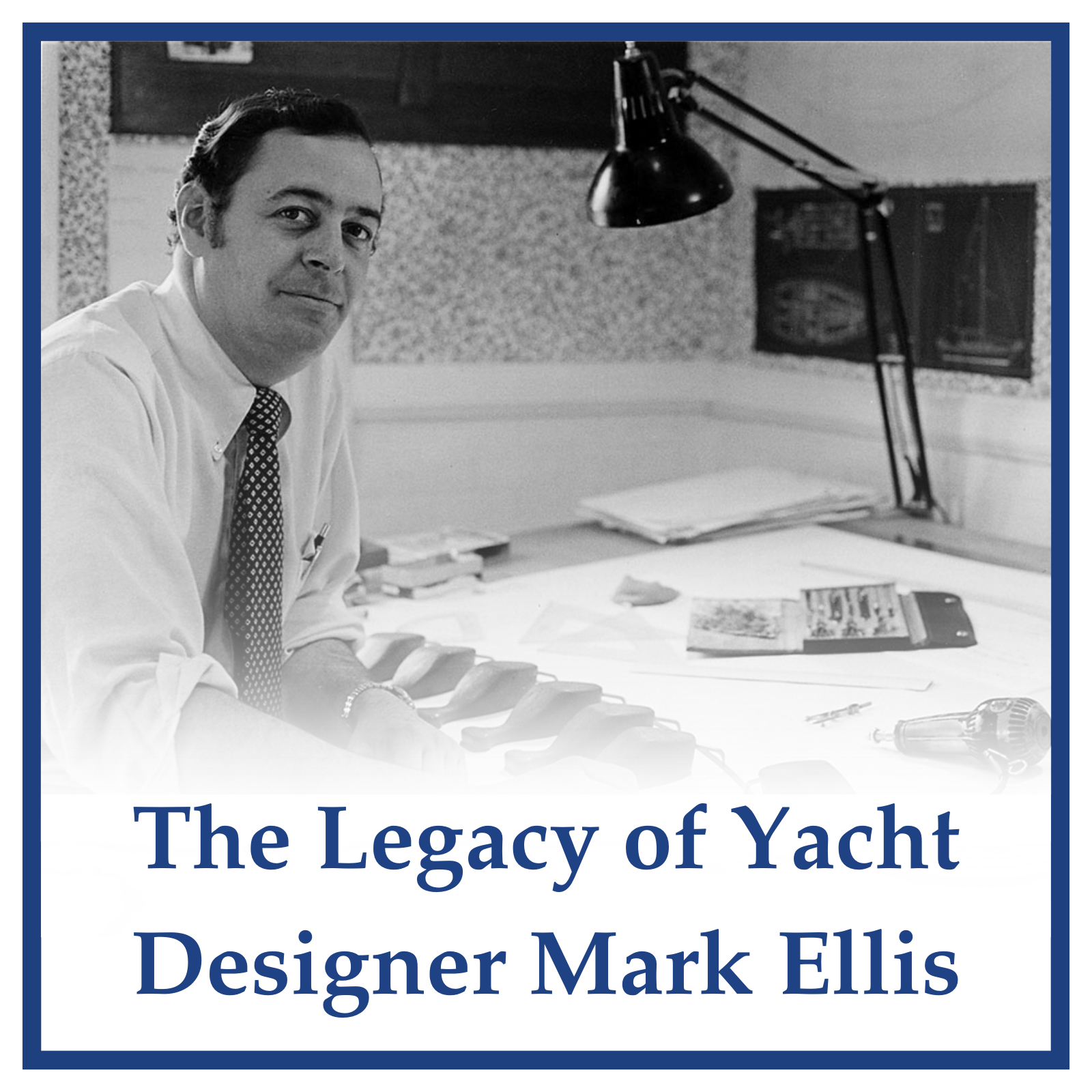
The evolution of iconic yacht design can often be tracked by complexity, but the true legacy of Mark Ellis is that he made sailing simple and power beautiful.
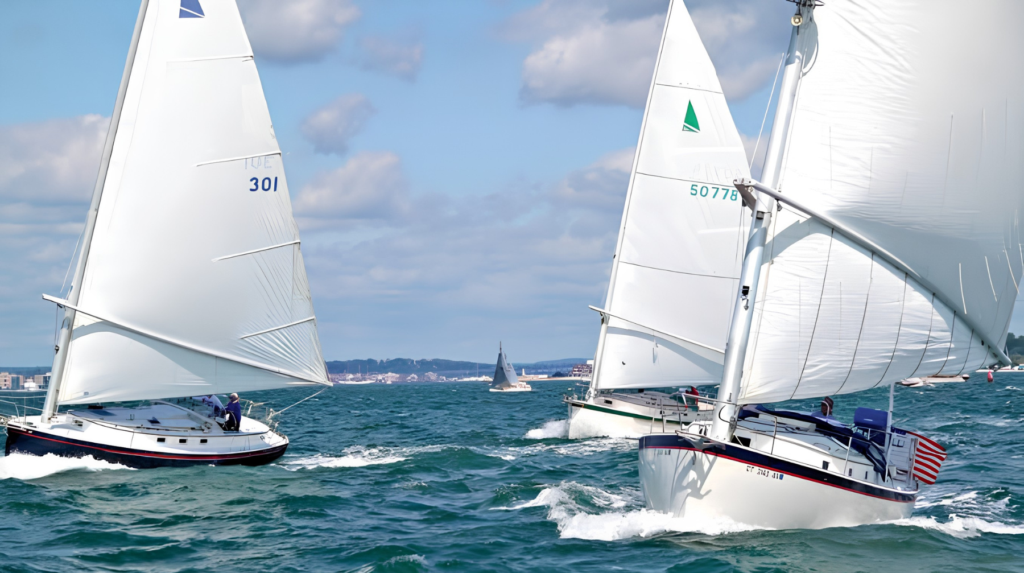
There is a certain kind of genius that looks obvious in hindsight. A single mast. No headsail. A wishbone boom you can handle alone in a building sea. When the Nonsuch 30 first appeared at the 1978 Annapolis Boat Show, plenty of experienced sailors were skeptical. A few years later, over 500 of them had been built, and the catboat revival was in full swing. That was Mark Ellis at work.
Ellis, born in Watertown, New York in 1945 and shaped by summers at a family cottage in the Thousand Islands, went on to become one of the most commercially successful and beloved yacht designers of his generation. His portfolio crossed categories that most designers never touch: iconic production sailboats, deep-vee powerboats with classic proportions, and a celebrated motorsailer that yacht architect Thomas Norton once called “perhaps the perfect motorsailer.” He did it all with a philosophy rooted in aesthetics, function, and the rare understanding that a good boat should look as right as it feels underway.
Early Career: from Phil Rhodes to C&C
Ellis didn’t stumble into yacht design. He pursued it deliberately, starting his career in the 1960s with the office of Phil Rhodes, one of the most respected names in American naval architecture. From there he moved to Ray Hunt Associates under John Deknatel, then to Ted Hood’s operation, all while earning a business degree from Boston University. That combination of design training and formal business education would define everything he did afterward.

In 1968 he joined the design office of Cuthbertson and Cassian in Port Credit, Ontario, the firm that became C&C Yachts. He transitioned into custom yacht sales within C&C before departing in 1974, encouraged by George Cuthbertson himself, to establish his own design firm. His first project under his own name was the Aurora 40, built by Henri Adriaanse, followed quickly by the Niagara 35 for builder George Hinterhoeller. Both were capable bluewater cruisers, serious boats that attracted serious buyers. But the design that would define the next decade was still taking shape in conversation with a Toronto businessman named Gordon Fisher.
The Nonsuch: Reinventing the Catboat for Modern Sailors
Gordon Fisher came to Ellis with a clear challenge: design a cruising sailboat that was genuinely easy for a single person to manage, without sacrificing performance or interior space. This was the mid-1970s, when IOR racing had pushed the mainstream toward complex, crew-hungry rigs. Fisher and Ellis went the opposite direction entirely.
The concept Ellis developed was rooted in the American catboat tradition: one mast, set well forward, carrying a single large sail. But this was no antique. The Nonsuch 30 sat on a modern underbody with a fin keel and balanced spade rudder. The rig used a freestanding mast and a wishbone boom that allowed the sail to be managed without a conventional boom vang or mainsheet traveler. The beam of nearly twelve feet created an interior that rivaled boats several feet longer. A cambered house top brought in light and headroom without looking ungainly.
George Hinterhoeller, initially uncertain about the unconventional design, agreed to build it. The Nonsuch 30 debuted at Annapolis in 1978 and found an influential early following. Over time, more than 520 Nonsuch 30s were built, with the full line eventually including the 22, 26, 30, 33, 36, and 40, totaling roughly 950 boats across all models. The Nonsuch name itself came from the ketch that served as the first trading vessel of the Hudson’s Bay Company, which suited the boats’ combination of historical reference and forward-thinking design.
The appeal was genuine and lasting. Owners found the rig easy to single-hand, the interiors spacious for the length, and the look distinctive without being eccentric. Nonsuch owners tend to be loyal in a way that few production boat lines ever earn.
When asked about objections to the boats appearance:
People thought it was a very odd boat. Friends of mine, who were good sailors and sailed lots of different boats, asked, “Why did you design a boat like that?” However, a lot of people picked up on the traditional aesthetics of the sheer line and the house and the basic catboat look. If they liked that, it was fine. But, for others, it took a little while to establish the idea.
Mark Ellis, in interview with Points East
I would add to it that Gordon Fisher, who was a major business leader and a major character in Canada, also had a substantial sense of self. He wasn’t pushy, but he did know who he was. People didn’t make fun of Gordon Fisher very readily because he was generally correct on things. He was an established, knowledgeable businessman, political, and a general character who was thought highly of. It was easier for him, with that sense of self, to show the boat off.
I’m not shy – I hope I’m not pushy – but it took a sense of self to carry on when people made fun of it. I just carried on. A good friend, sort of on the same level as Gordon Fisher, said, “That’s the ugliest damn boat I’ve ever seen.” I took him out on it, and he said it was wonderful. I don’t think I took offense. When I look back on doing it 40 years ago – I’m 73 now – I believe I was self-assured enough and didn’t worry about it.
The Niagara Line: Performance for Cruisers Who Want to Go Places
Running alongside the Nonsuch program, Ellis developed the Niagara line for Hinterhoeller as a more conventional cruising sloop series. Where the Nonsuch was a statement boat, the Niagara was built for the broad middle of the cruising market: sailors who wanted a proven fin-keel sloop with good offshore credentials and comfortable accommodations.
The Niagara 35 became the cornerstone, a well-balanced cruiser that earned a reputation for sea-kindliness and solid construction. The line eventually extended to the Niagara 42, giving buyers a range of sizes that could take them from Great Lakes weekending to serious offshore passages. Hinterhoeller’s build quality and Ellis’s eye for proportion made the combination work. These were boats that aged well, which is why so many are still actively sailing today.
Together, the Nonsuch and Niagara lines gave Hinterhoeller a production identity that was the envy of Canadian builders. The two series complemented each other without competing: one for sailors who wanted to simplify their relationship with the sea, one for those who wanted a conventional rig done exceptionally well.
Limestone: Deep Vee and Classic Lines on the Water
The move into powerboats came from an unexpected commission. Fredrik Eaton, an early Nonsuch owner, approached Ellis to design a power launch for accessing his Georgian Bay island. The result was the Limestone 24, Ellis’s first powerboat, and it set the template for everything that followed.
Ellis drew on his time at Ray Hunt Associates, where the deep-vee hull form had been refined into a serious tool for offshore performance. He applied that knowledge to create powerboats that ran deep vees forward, transitioning aft into wide chine flats for lift and stability. The approach gave Limestone boats a hull that handled rough water with confidence while returning reasonable fuel economy at cruise.
What set the Limestone apart aesthetically was the same quality that made the Nonsuch recognizable: classical proportions applied to a modern platform. These were not boats that looked like they were designed by committee. The Limestone 24 led to the 17, 20, 22, and 26, with various builders including Medeiros, Bruckmann, and Ontario Yachts producing models at different points. After the closure of Hinterhoeller in the early 1990s, most of the line consolidated under Medeiros. The Limestone brand survived and found a second life, with new ownership eventually acquiring the molds and reviving production.
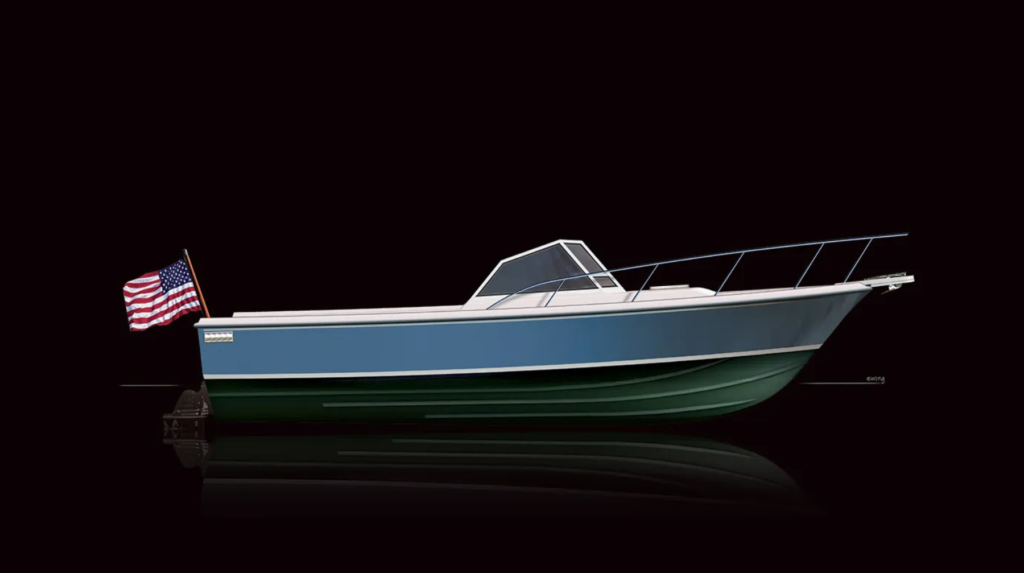
The Limestone remains, for many Great Lakes boaters, the benchmark for what a day boat or weekend cruiser should look like.
The Cabo Rico Northeast 400: The Motorsailer That Actually Does Both
Most motorsailers disappoint. They motor adequately and sail reluctantly, splitting the difference in a way that pleases no one. The Cabo Rico Northeast 400 is a genuine exception, and it came from an honest starting point.
In the early 1990s, Connecticut-based Nonsuch dealer Jim Eastland approached Ellis with a request for a motorsailer series. Ellis’s response was essentially to take the philosophy of the Nonsuch and translate it into a boat that could spend most of its time under power while remaining a real sailboat when the wind came up. The basic concept, as Ellis himself described it, was a Nonsuch hull flattened aft so it wouldn’t dig in the stern at speed, with a rig balanced carefully enough to perform even when heeled.
The result was originally envisioned at 36 feet, stretched during development to 37.5 feet, and marketed as the Northeast 400. Cabo Rico built 34 of them in Costa Rica before Bruckmann continued the line with a larger version. The boat carried a 100-horsepower Yanmar diesel that could push the easily driven hull to 10 knots under power, with a comfortable cruise around seven or eight. Under sail, owners reported the boat moving at 8 or 9 knots in a good breeze, stiff due to its hull form and capable of carrying full canvas in conditions where most sailors would be reefing.
The layout was a particular strength. The cockpit sat at the same level as the pilothouse cabin sole, allowing access directly from a swim platform through a transom door. The inside and outside helm stations gave options in weather. Below, the boat offered two staterooms, generous storage, and accommodations that made extended cruising comfortable rather than merely possible. Yacht architect Thomas Norton, who reviewed the design, wrote that the Northeast 400 was perhaps the perfect motorsailer, and that its cockpit access was so well thought out he could have managed it in a wheelchair.
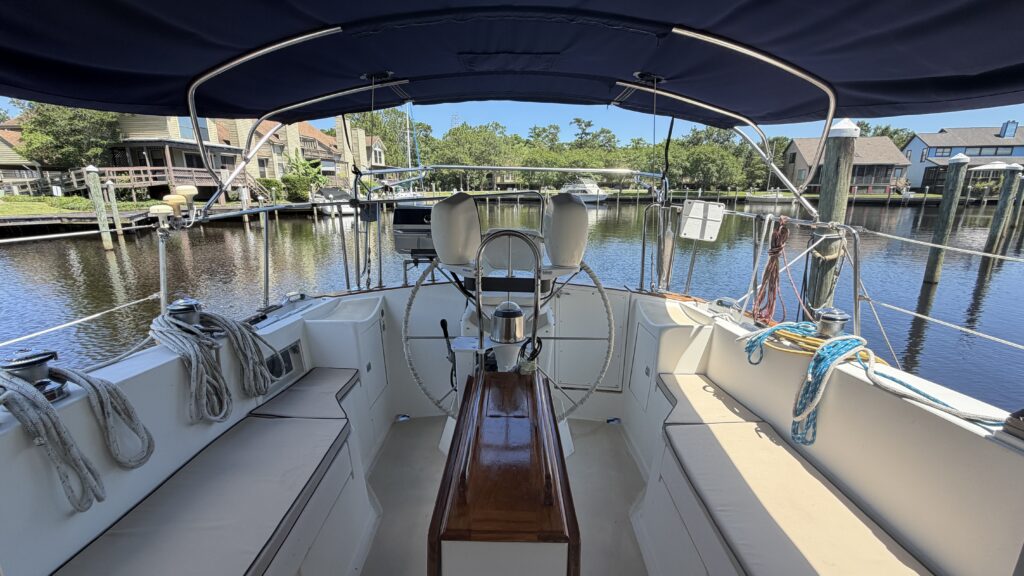
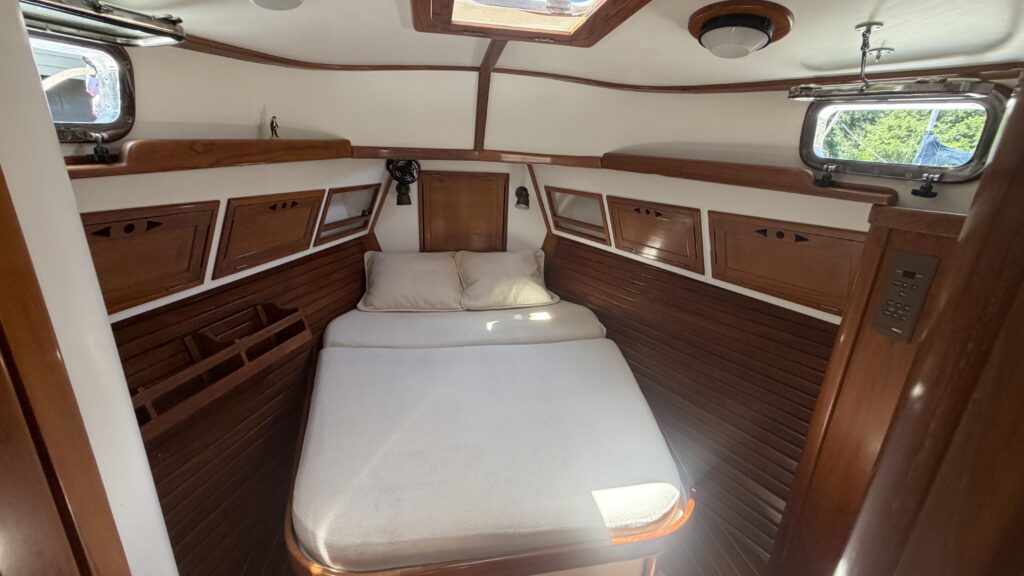
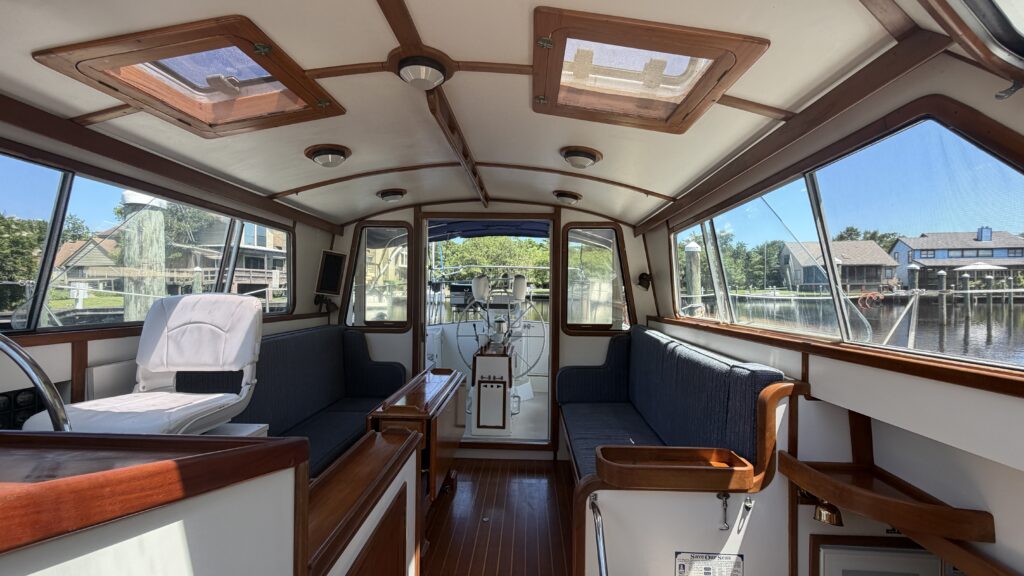
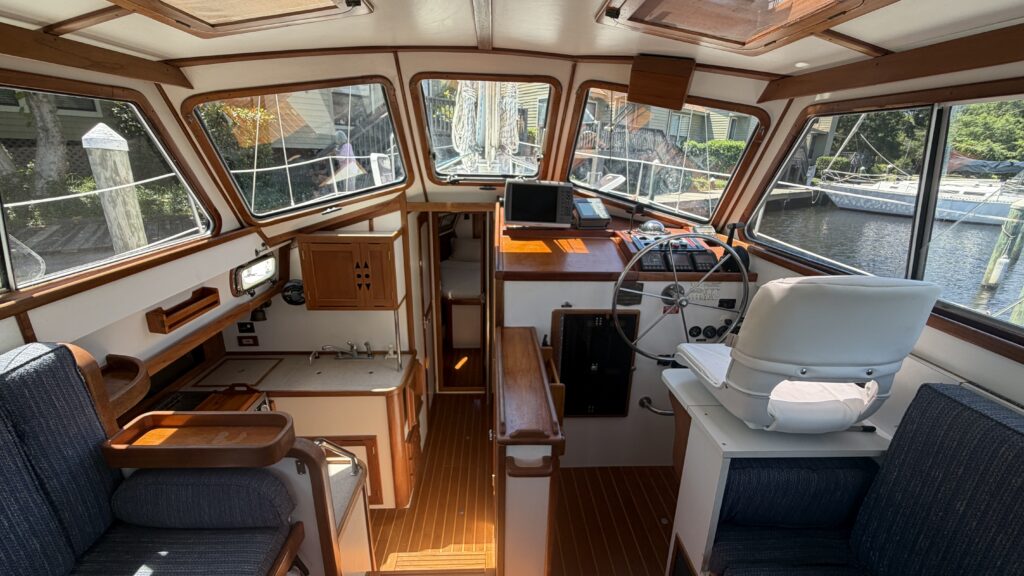
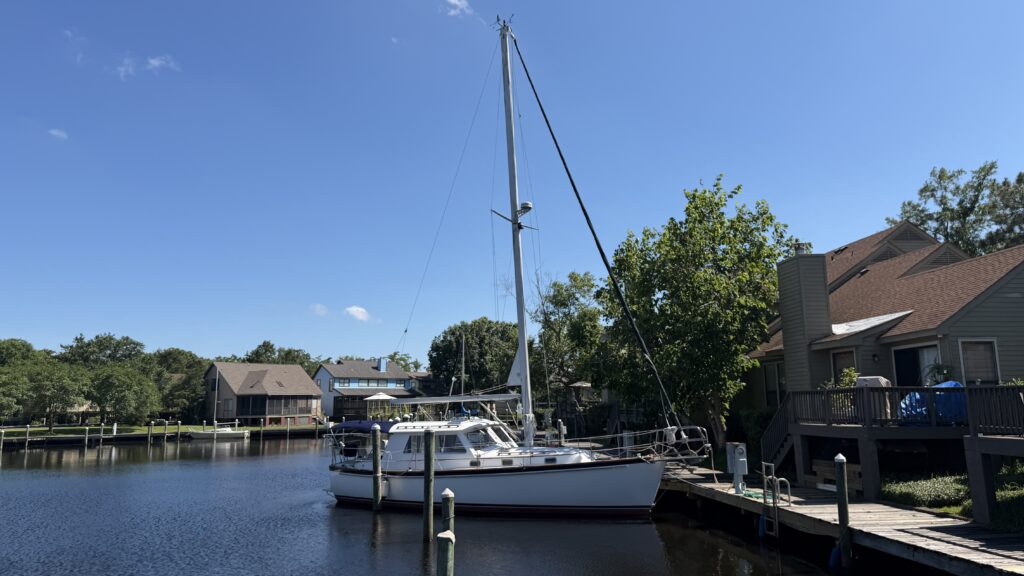
Ellis sailed one himself. His own Northeast 400, Lotus, became his regular boat during his years in Essex, Connecticut, which says something about how seriously he took the design.
What Made Ellis Different
Ellis was direct about his design philosophy when asked. He described two sides to it: aesthetics first, because a classic line that lasts still looks right twenty years later, and performance second, because beauty without function is decoration. He applied both principles consistently across sailboats, powerboats, and motorsailers, which is unusual.
He was also unusually sharp about the business of yacht design. In an industry where many talented designers struggled with the commercial side, Ellis negotiated royalty agreements with builders, secured advance customer funding to cover tooling costs, retained copyright on the product names, and often maintained the right to sell the boats through his own brokerage. Even builder advertisements for his designs were required to credit him. He understood that good design was intellectual property worth protecting, a view that was ahead of its time in the yacht design world.
His business partner Dave Harris described him as someone who combined a fine design sense with genuine commercial acumen, and noted that his range across sail and power was exceptional for any designer of his era.
The boats Ellis designed are still sailing in numbers that reflect how well they were conceived. Nonsuch owners hold annual rendezvous. Limestone boats appear regularly on the used market in excellent condition. Northeast 400s trade at prices that reflect their reputation rather than just their age. That kind of longevity is not common.
| Boat | Type | Builder | Years Built | Notable Feature |
|---|---|---|---|---|
| Nonsuch 30 | Catboat Sailboat | Hinterhoeller Yachts | 1978 onward | Freestanding cat rig, 522+ built |
| Nonsuch 26 | Catboat Sailboat | Hinterhoeller Yachts | 1981–1988 | 258 built; scaled-down 30 |
| Nonsuch 36 | Catboat Sailboat | Hinterhoeller Yachts | 1983 onward | 70 built; largest production Nonsuch |
| Nonsuch 22 | Catboat Sailboat | Hinterhoeller Yachts | 1984 –1990 | 58 built |
| Nonsuch 33 | Catboat Sailboat | Hinterhoeller Yachts | 1988 –1996 | 67 built |
| Niagara 35 | Cruising Sloop | Hinterhoeller Yachts | 1970s onward | Bluewater cruiser; cornerstone of Niagara line |
| Niagara 42 | Cruising Sloop | Hinterhoeller Yachts | 1980s | Offshore-capable cruising sloop |
| Limestone 24 | Deep-Vee Powerboat | Hinterhoeller / Medeiros | 1980s onward | First Ellis powerboat; inspired full Limestone line |
| Cabo Rico Northeast 400 | Motorsailer | Cabo Rico / Bruckmann | 1994 onward | 34 built by Cabo Rico; 100hp Yanmar, 10 knots under power |
Finding A Mark Ellis Design Today
Ellis boats hold their value for good reason: they were designed to be used, not just admired, and they were built by yards that shared that standard. Hinterhoeller, Cabo Rico, and Bruckmann each brought genuine craftsmanship to their respective programs, and the combination of quality construction and thoughtful design has given these boats exceptional longevity.
Nonsuch catboats come up regularly on the brokerage market, ranging from weekend-ready 22s to the more capable 30s and 36s. The Northeast 400 is rarer, with only a few dozen ever built, which means finding one takes patience but rewards it. Limestone boats, particularly the 20 and 24, remain active in Great Lakes and Northeast coastal waters and are among the more practical choices for buyers who want a well-designed day cruiser with real heritage behind it.
At Murray Yacht Sales, we have always appreciated the boats that come from a coherent design philosophy. Mark Ellis boats have that quality. If you are researching a Nonsuch, a Niagara, or a Northeast 400, or simply want to understand what you are looking at when one comes across your screen, we are glad to talk through what makes these boats what they are.