

-
- Author: Team Murray Yacht Sales Technical Division
- Audience: Motor Yacht Operators, Cruising Sailors, and Yacht Buyers
At Murray Yacht Sales, we consistently remind our clients that a vessel’s luxury and safety offshore rely just as heavily on auxiliary power as they do on primary propulsion. When navigating the market for modern cruising yachts, motor yachts, or catamarans in the 45-to-65-foot range, domestic power demands scale dramatically. Safely running multiple 16,000 BTU climate-control zones, high-output watermakers, all-electric galleys, and integrated navigation suites simultaneously demands a robust marine generator.
For decades, the Westerbeke 15.0 kW marine diesel generator has been a dominant contender in this class. Famously classified under the manufacturer’s low-vibration family of machinery, these four-cylinder units are built to thrive in harsh, salt-laden bilges. This complete guide decodes the platform’s layout, engineering timeline, strengths, weaknesses, and key maintenance profiles.
Decoding the Letters and Numbers: Westerbeke 15 kW Nomenclature
15.0 BTD / 15.0 BTDB / 15.0 BTDC / 15.0 EDT D-NET / 15.0 EGTD
Westerbeke model numbers look like alphabet soup at first glance, but they follow a strict internal logic. Understanding these designations helps you quickly identify what type of engine block, control system, and electrical generation technology is installed on a vessel.
-
- Numerical Value (15.0): Indicates the continuous output rating in kilowatts (kW) when operating at standard frequency (60 Hz in North America).
- B: Indicates a Brushless generator end. This design uses an exciter winding rather than physical carbon brushes and slip rings, dramatically reducing maintenance and eliminating electrical interference with your VHF and marine electronics.
- TD: Represents the True Diesel family architecture, distinguishing these heavy-duty four-cycle power plants from gas models.
- A / B / C / D (Suffix): Represents the Engineering Series Revision. For example, the shift from a “BTDB” to a “BTDC” marked a significant structural change, moving from a large-displacement block to a lighter, downsized Japanese industrial footprint.
- E: Denotes Electronic Governing. This means a digital microprocessor manages the engine speed rather than old-fashioned mechanical weights and springs, providing near-instantaneous throttle adjustment.
- G: Signifies a dedicated Generator-Specific block configuration optimized for continuous RPM operations.
- D-NET™: Indicates the inclusion of Westerbeke’s proprietary Digital Network interface, enabling native data communication over a NMEA 2000 backbone to feed data directly to your helm’s multifunction displays (MFDs).
History and Model Variations Over Time
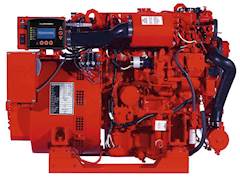
Westerbeke has a long-standing history of taking proven, industrial-grade Japanese engine blocks—primarily from brands like Mitsubishi and Isuzu—and adding high-quality marine cooling, exhaust, and safety equipment. The 15.0 kW line has evolved through several distinct phases to balance physical size, weight, and electrical sophistication.
The Legacy Iron Models: 15.0 BTD & BTDB
During the 1980s and 1990s, the BTD and BTDB variants were foundational in the cruising industry. These early machines featured high-displacement blocks, with the BTDB boasting a large 134.8 cubic-inch engine. Weighing over 760 pounds, these generators were heavy and required significant space, yet they delivered immense low-end torque and exceptional resistance to wear. They utilized straightforward mechanical governors and analog control relays rather than computers.
The Downsized Mechanical Series: 15.0 BTDC
To accommodate smaller engine rooms and save weight without losing output, Westerbeke introduced the 15.0 BTDC. This variant shifted to a tighter 107.27 cubic-inch engine footprint, lowering its dry weight to roughly 569 pounds. Cruisers highly valued this generation because it maintained the uncompromised simplicity of mechanical fuel delivery and basic electrical controls, making it easy to fix in remote ports.
The Modern Digital Network Series: 15.0 EDT D-NET & EGTD
As modern yachts evolved to require integrated electronics, Westerbeke introduced the 15.0 EDT D-NET and the active 15.0 EGTD platforms. Keeping the 107.27 cubic inch base block, these versions replaced old mechanical governors with highly accurate electronic speed controls. The D-NET series integrates diagnostic microprocessors and NMEA 2000 networking capabilities, allowing operators to monitor voltage, temperature, and system alerts directly from their helm multifunction displays.
The Specialized Remote Platform: 15.0 BTDCR
Developed concurrently to expand utility, the 15.0 BTDCR variant was engineered using the same 107.27 cubic inch core footprint but adapted for remote industrial, mobile, or alternative radiator configuration layouts. Weighing approximately 615 pounds due to revised cooling frameworks and framing, it offered an option for electronic voltage regulation or external electronic governing. This model provided a reliable stepping stone for boaters retrofitting non-standard engine rooms where standard heat exchangers required custom, split-system remote installations.
Technical Specifications Baseline
While physical footprints vary slightly between legacy and contemporary models, these parameters define the modern-era Westerbeke 15.0 kW configurations:
| Parameter | Operational Specification |
| Cylinder Configuration | 4 Cylinders Inline |
| Rotational Speed | 1800 RPM at 60 Hz output |
| Engine Displacement | 107.27 cubic inches (1.75 Liters) |
| Induction System | Naturally Aspirated |
| Cooling Configuration | Fresh-water loop via copper-nickel heat exchanger |
| Seawater Pump | Direct gear-driven impeller assembly |
| Dry Weight | 569 lbs (BTDC) to 588 lbs (EDT) |
Key Advantages
-
- Slow-Speed Longevity: Instead of screaming along at 3600 RPM like compact economy generators, this unit chugs along at a calm 1800 RPM. This low rotational speed greatly reduces internal friction, vibrations, and structural noise, allowing well-maintained engines to easily surpass 8,000 to 10,000 hours of use.
- Single-Side Maintenance Access: Westerbeke strategically arranged routine service points with tight bilges in mind. The primary fuel filter, engine oil filter, raw water pump, and dipstick are accessible on one side of the block, making regular checkups easier.
- Automatic Air Purging: Air pockets inside a fuel system can cause a diesel engine to stall and usually require manual line venting. Westerbeke’s self-bleeding design automatically clears the fuel system of air, ensuring straightforward filter swaps.
- Auxiliary Power Take-Off (PTO): A significant bonus for larger blue-water boats, the front pulley assembly features an integrated PTO adapter. This allows owners to attach an electric clutch and hydraulic pump to run anchor winches, bow thrusters, or emergency backup propulsion.
Technical Disadvantages
-
- Physical Footprint: Because it relies on a heavy-duty industrial block, this unit takes up more space and weighs considerably more than modern inverter-based options. Your yacht’s mounting stringers must be structurally capable of carrying this mass.
- Sensory Electronics Risks: While modern digital control systems on EDT and EGTD models eliminate voltage fluctuations when large motors start up, the computer modules introduce additional vulnerability. Damp salt air or voltage spikes can damage these control boards, leading to automatic shutdowns that require specialized factory parts to fix.
- OEM Component Costs: Factory replacement parts—especially the marine-specific exhaust loops, custom copper-nickel heat exchangers, and digital control panels—often command premium pricing.
Common Maintenance Parts & Cross-Reference Guide
Because Westerbeke uses standard industrial engines as its base, certain basic engine components can be cross-referenced with commercial tractor or industrial equipment channels to save money. However, never substitute marine safety parts—such as the shielded marine alternator, starter motor, or water-injected exhaust elbow—with non-marine hardware, as doing so poses major fire and flooding hazards.
The following chart outlines common service components, factory numbers, and recognized aftermarket alternatives:
| Maintenance Component | Westerbeke OEM Part # | Aftermarket / Sierra Alternative | Recommended Service Window |
| Engine Oil Filter | 036918 | Sierra 23-7800 | 100 Hours / Annually |
| Fuel Filter Element | 047006 | Sierra 23-7770 | 250 Hours / Annually |
| Raw Water Impeller Kit | 034440 | Sierra 23-3307 | 200 Hours / Annually |
| Sacrificial Zinc Anode | 11885 | Sierra 23-6400 | 50 Hours / Seasonal Check |
| Air Filter Element | 039705 | Sierra 23-1101 | 250 Hours / As Needed |
| Freshwater Loop Hose Kit | 045055 | N/A (Proprietary Molded) | Inspect Bi-Annually |
Yacht Buyer’s Inspection & Survey Checklist
If you are looking at a brokerage boat outfitted with one of these 15.0 kW generators, Team Murray Yacht Sales advises focusing on these four key areas during your sea trial and survey:
-
- Check the Exhaust Mixing Elbow: The 45-degree water-injected exhaust elbow handles hot gases and raw seawater simultaneously. Over time, salt water can erode the inner wall, allowing water to back-feed directly into the engine’s cylinders. Look for salt crystals, blistering paint, or rust weeping on the elbow casing.
- Evaluate the Heat Exchanger Loop: Ensure the copper-nickel heat exchanger is sound. If previous owners neglected the internal sacrificial zinc anodes, galvanic corrosion will breach the inner cooling lines, causing raw seawater to contaminate the internal freshwater antifreeze loop.
- Perform a Stepped Load Test: Start the unit and check its performance at 50% to 70% load by running several heavy appliances, such as onboard air conditioners, simultaneously. A healthy generator should handle a sudden draw smoothly, without producing dark exhaust smoke, and maintain a stable voltage output.
- Review the Digital Diagnostic Records: On D-NET electronic models, use the display panel to read the historical error log. Repeated warnings for high exhaust temperatures or low oil pressures are clear indicators of cooling restrictions or deeper mechanical wear that must be addressed before heading offshore.
Final Thoughts: The Specialist’s Verdict
The Westerbeke 15.0 kW marine diesel generator remains one of the most durable auxiliary power plants available for cruising yachts. Your ideal model variation comes down to how you plan to use your boat and your maintenance style.
If the boat you are considering features an older 15.0 BTDC, you can appreciate the complete mechanical simplicity of a machine that requires no computers to run and can be fixed with basic tools. If the boat utilizes a modern EDT or EGTD platform, you gain excellent voltage control, minimal output drop, and modern network integration with your helm displays. As long as you shield the electronic modules from water spray, keep the fuel filters pristine, and regularly replace the heat exchanger zincs, this four-cylinder platform will deliver thousands of hours of reliable luxury on the water.