

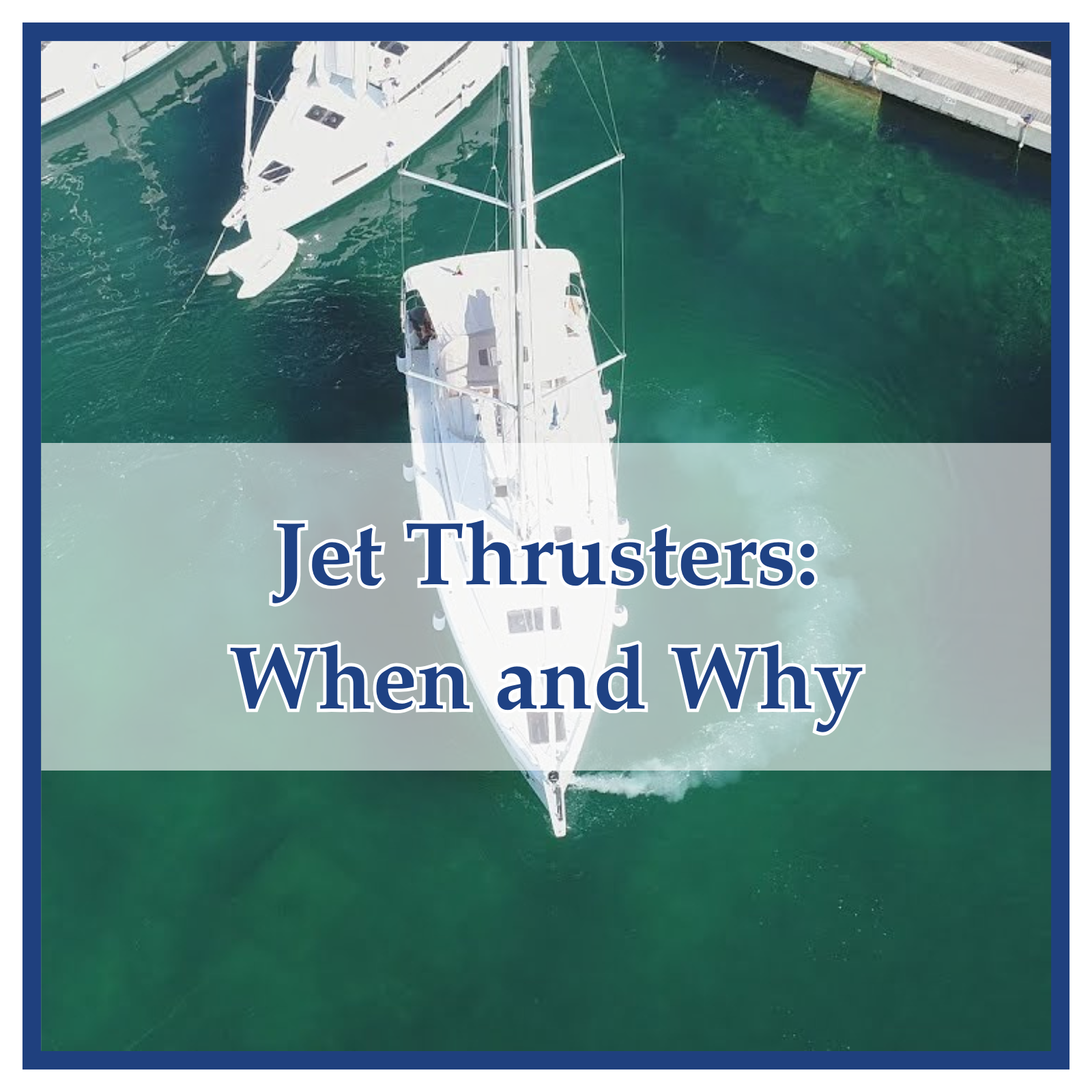
In boating, need is a slippery concept.
You don’t need a Seakeeper. You don’t need a boom-furling mainsail. You definitely don’t need jet thrusters.
But spend five minutes trying to slide into a tight slip with a crosswind while shorthanded, and suddenly your missing piece of equipment becomes a no-brainer.
Jet thrusters thrive in the gray area where practicality, performance, and preference all overlap.
The Problem (That Isn’t Always A Problem)
Docking isn’t inherently difficult. Until it is.
A calm day, wide fairway, and a wide margin for error? No problem.
Add current, wind, tight quarters, and a short-handed crew? It’s a different exercise entirely.
Boating also isn’t static – it’s a journey that evolves with the owner, and there are clearly defined seasons:
- Beginners building up their confidence and learning from their friends and trusted old salts.
- Experienced owners, who’ve seen a thing or two and can usually navigate the things they haven’t yet encountered.
- Owners who are, for one reason or another, less mobile than they used to be, or simply need to reduce stress and enjoy the ride a little more.
Confidence and competence both play a role – but they’re not the same thing.
Some owners take pride in handling any situation unaided. Others would rather make every docking predictable and controlled. Neither approach is wrong, but they lead to very different evaluations when deciding on upgrades.
We have clients who wouldn’t consider a thruster on anything under 45 feet. We have others who add one to a much smaller boat and say it completely changed how (and how often) they use it.
When Traditional Solutions May Fall Short
Traditional bow and stern thrusters solve the problem, but not without trade-offs.
- Tunnel thrusters introduce drag
- They add noise and vibration
- Installation can mean structural compromise
- And in some boats, there simply isn’t space to do it properly
On performance-oriented hulls, catamarans, or sleeker designs, those compromises become harder to justify. Even aesthetically, some owners don’t want to alter the lines of the boat for something they may only use occasionally.
Enter Jet Thrusters – The “Minimally Invasive” Upgrade
Jet thrusters offer a different approach:
- No tunnel cutting
- Minimal impact on drag and performance
- Cleaner, less intrusive installation
- Ideal for boats where space is limited or performance matters
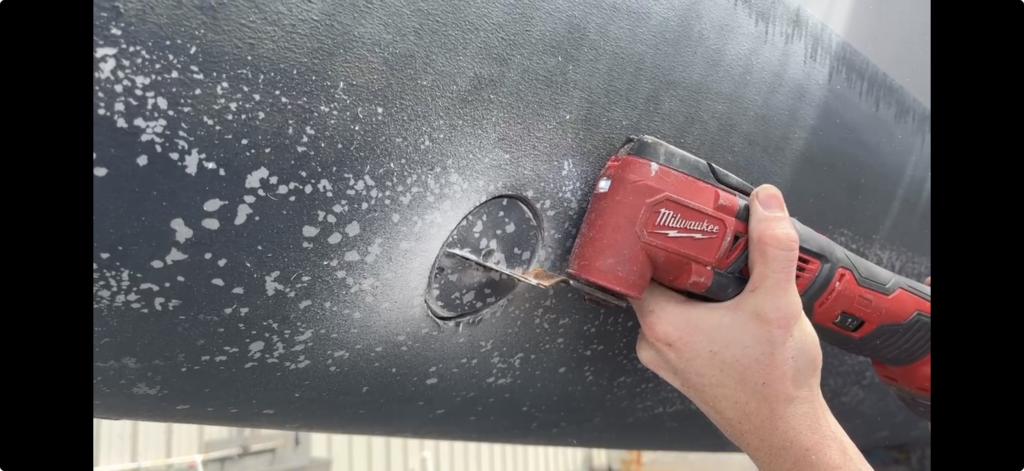
They don’t win with brute force, but rather with precision and assistance where you need it, without fundamentally changing the boat. For many owners, this hit a sweet spot: enough control to remove stress, without the downsides that come with more traditional systems.
The Decision
There’s no rulebook for this.
In the same way there’s no universal line between when a boat becomes a “yacht,” there’s no defined point where a boat suddenly needs thrusters.
It’s subjective. Completely.
Jet thrusters aren’t about what your boat can do.
They’re about how you want to use it, how often, and how you want to feel every time you bring it back to the dock.
Because at the end of the day, the best upgrade isn’t the one you need, it’s the one that makes you want to use your boat more often.