
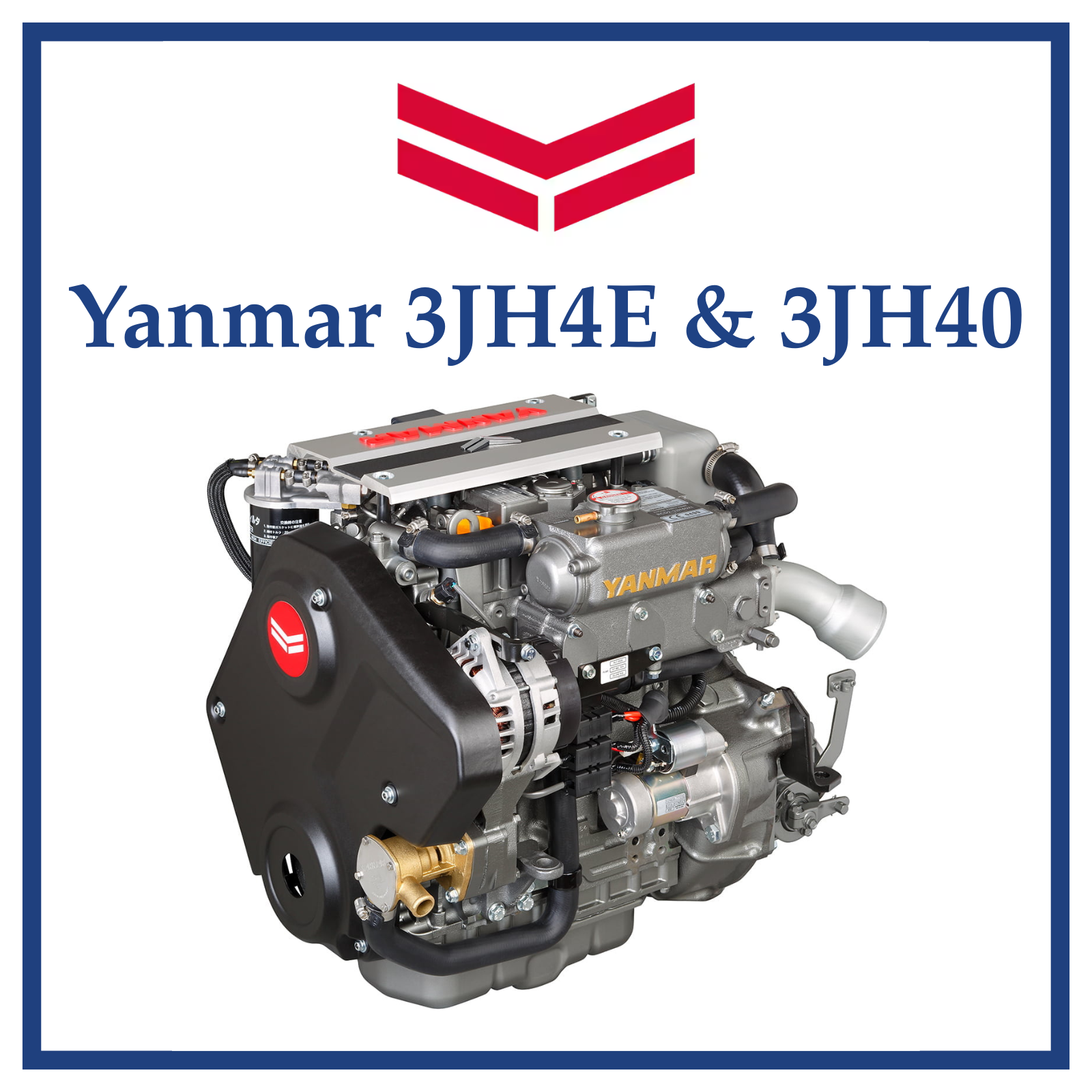
The Yanmar 3JH4E, and it’s successor the 3JH40, are popular engine choices in sailboats and catamarans from 35 to 45 feet. Both are held in high regard due to low vibration and noise and ease of service.
Key Facts & Specifications:
General Specifications (Yanmar 3JH4E):
- Engine Type: 3-cylinder, 4-stroke marine diesel
- Aspiration: Naturally aspirated
- Fuel System: Mechanical Direct Injection
- Rated Power: 40 HP
- RPM at Rated Power: 3000 RPM
- Displacement: 1.642 liters
- Cooling: Heat exchanger
Yanmar 3JH40
The Yanmar 3JH40 replaced the older series with advanced, computer-controlled common-rail fuel injection for improved emissions and fuel consumption. The specifications and performance are very similar, with a bump of efficiency. The 3JH40 is the smallest in her class and is often used as a direct replacement for 3JH4E repowers.
Transmissions
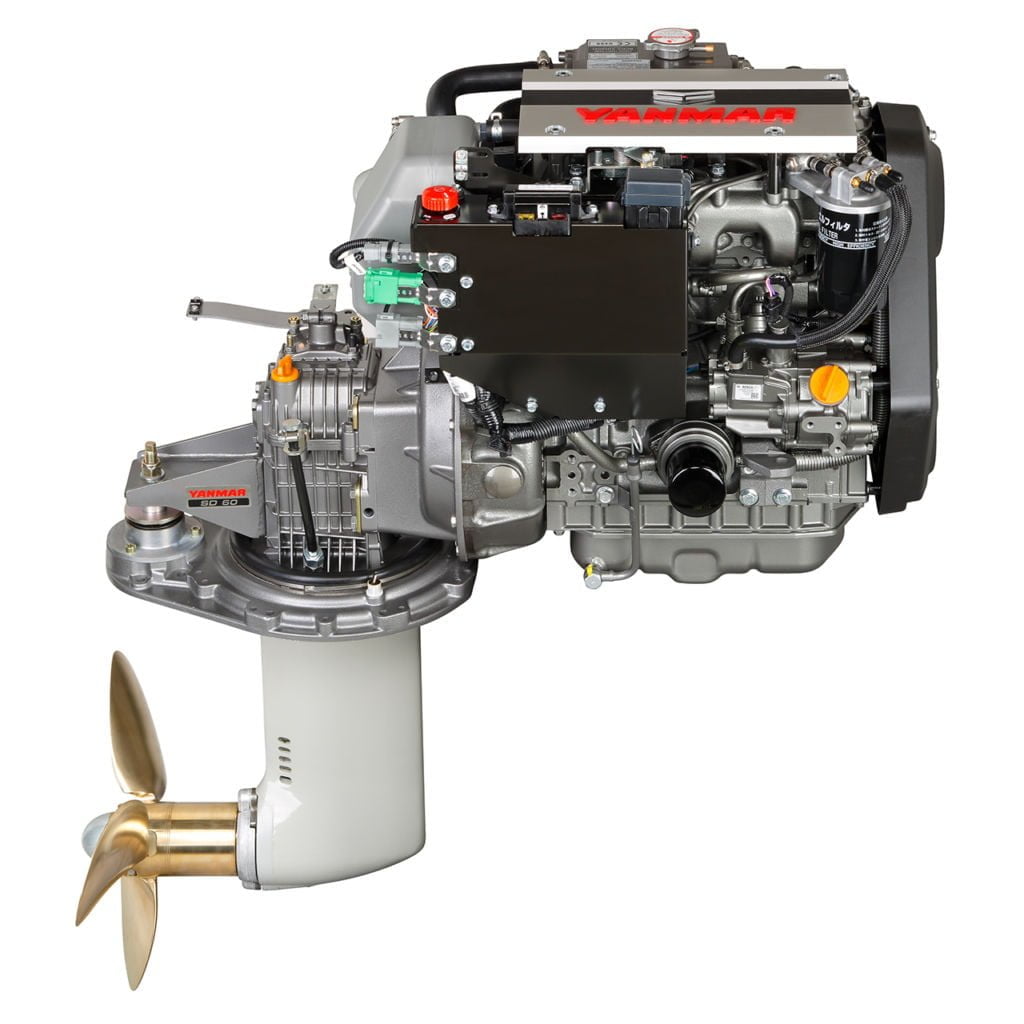
Frequently paired with KM35A/P gears or SD50/60 sail drives.
Vessels Commonly Powered by the Yanmar 3JH4E & 3JH40
These engines are the global standard for propulsion in small to mid-sized leisure craft, offering reliable output in a compact size.
Sailboats and Catamarans powered by the modern 3JH40:
- Beneteau – The engine of choice for the modern Beneteau Oceanis 37.1
- Jeanneau – Since Groupe Beneteau likes to buy engines in bulk, they’re also on the Sun Odyssey 380.
- Dufour – The 390 and 412 frequently use the 3JH40 as well.
- Hanse – Standard engine on the Hanse 410.
Those powered by the 3JH4E:
- Beneteau – Commonly found in 37 foot Oceanis models like the 373.
- Jeanneau – Frequently powering the Sun Odyssey 389 and early versions of the 39i.
- Lagoon – You’ll find twin 3JH4E engines on the Lagoon 380 S2 and Lagoon 420.
- Bavaria – These are standard on Bavaria’s 37 and 38 foot cruisers of the late 2000’s.
Reliability & Longevity
The Yanmar 3JH4E and 3JH40 are popular marine diesel engines primarily for monohull sailing yachts and catamarans up to 45 feet. While the 3JH4E is an older, naturally aspirated mechanical model, the 3JH40 is its modern, electronically controlled successor.
Why both are respected:
- Compact dimensions and weight
- Common rail technology
- Reduced noice and vibration
- High reliability
- Easy installation and connectivity
Maintenance and Support
Yanmar’s extensive service network ensures that parts like impellers and filters are available in almost any major cruising port worldwide.
Routine maintenance typically includes:
- Scheduled oil and filter changes
- Fuel system service
- Cooling system service
Conclusion
The Yanmar 3JH4E and 3JH40 represent the gold standard of auxiliary power for the 35 to 45 foot sailing segment, marking the transition from rugged mechanical simplicity to high-tech electronic efficiency. While the older 3JH4E is celebrated for its bulletproof reliability and ease of DIY repair, the modern 3JH40 offers a more refined experience with virtually no smoke, less vibration, and integrated digital diagnostics. Owners of either engine can expect longevity and reliability, backed by a global service network that is second to none.
Ultimately, these engines define their class by balancing the heavy-duty demands of cruisers with the space and weight constraints of performance hull designs.